Summon any model.
The open-source coding agent that stays light on your tokens and lighter on your machine.
curl -fsSL https://summonr.dev/install.sh | sh
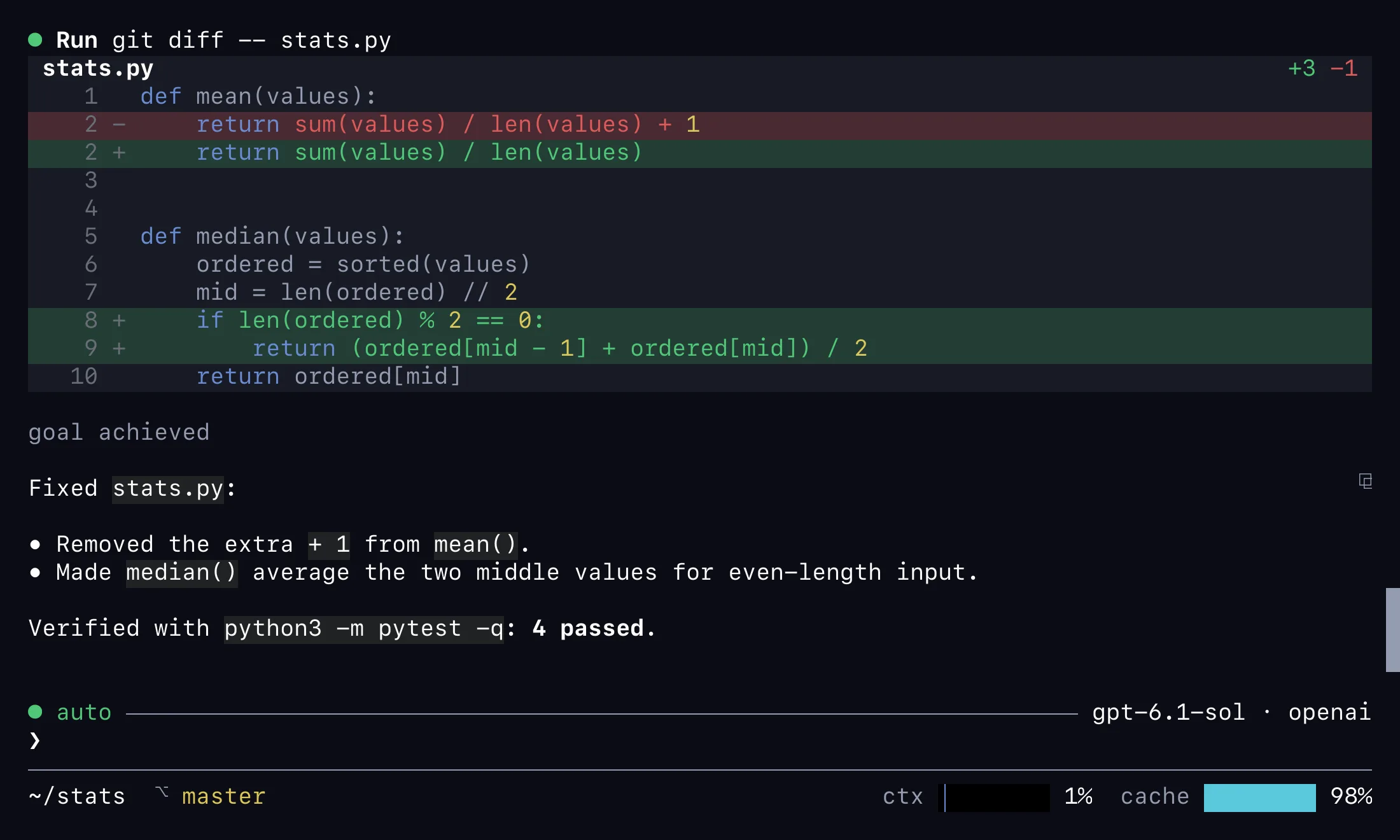
- 3× fewer tokens than Codex
- 5–16× less memory
- 28 providers built in
vs Codex · GPT-6.1 Sol, ChatGPT plan · Terminal-Bench 2.1 · 89 tasks × 3 trialssummonr 0.1.0, Codex 0.162.1
vs Grok Build · Grok 4.7, SuperGrok plan · Terminal-Bench 2.1 · 89 tasks × 3 trialssummonr 0.1.0, Grok Build 1.0.52
vs pi, OpenCode · GLM 5.3 Flash, z.ai · Terminal-Bench 2.1 · 86 tasks × 1 trysummonr 0.1.0, pi 1.0.0, OpenCode 2.0.22
Each pair ran on the same model. OpenCode ran in a later job than summonr and pi. *Solves that looked up published answers count as misses: Codex 11, summonr 0; in the Grok run, summonr 10, Grok Build 5. How we measured
Your agents talk to each other.
Mention any agent with @ and it picks up the message, even on a different model.
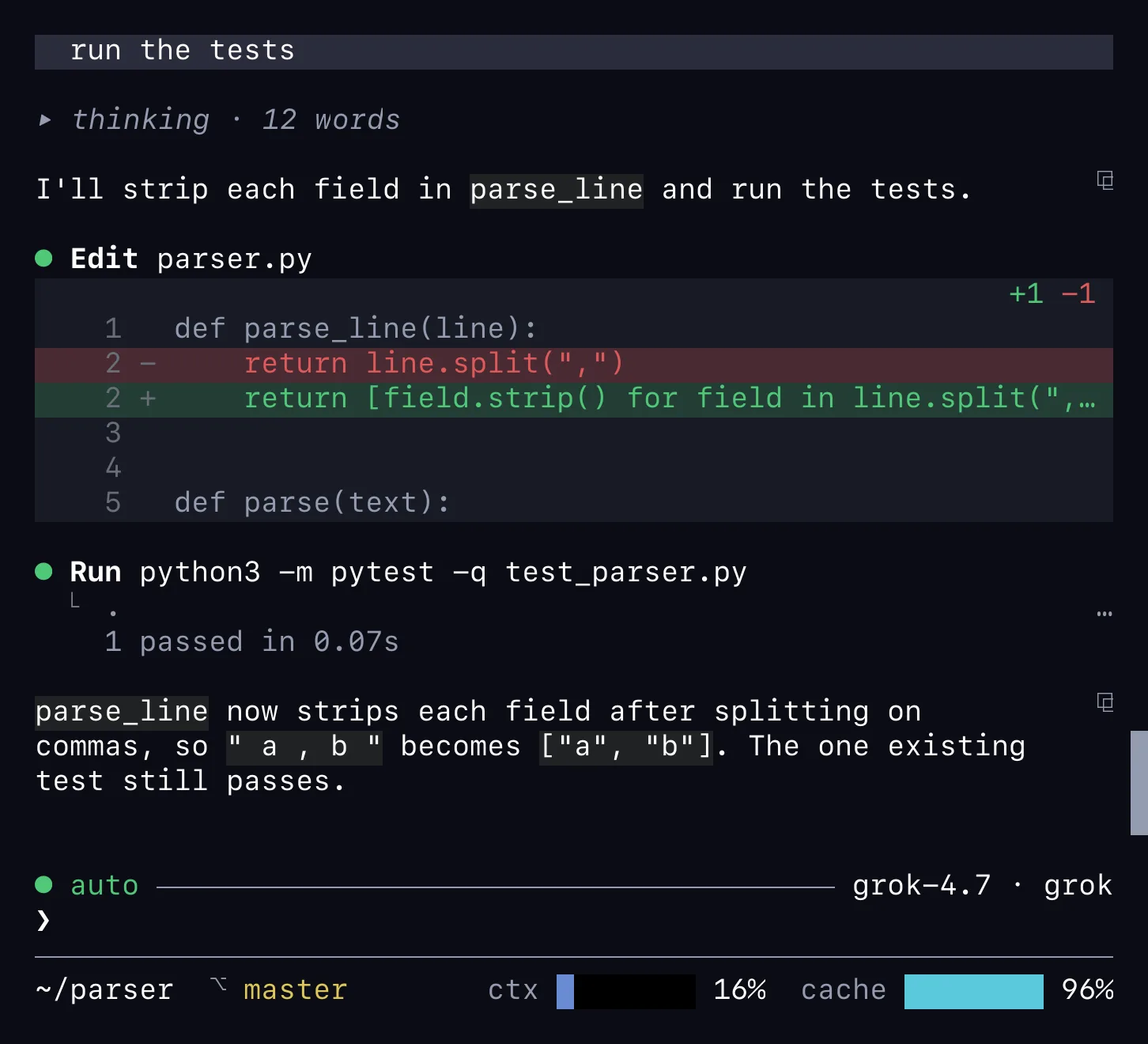
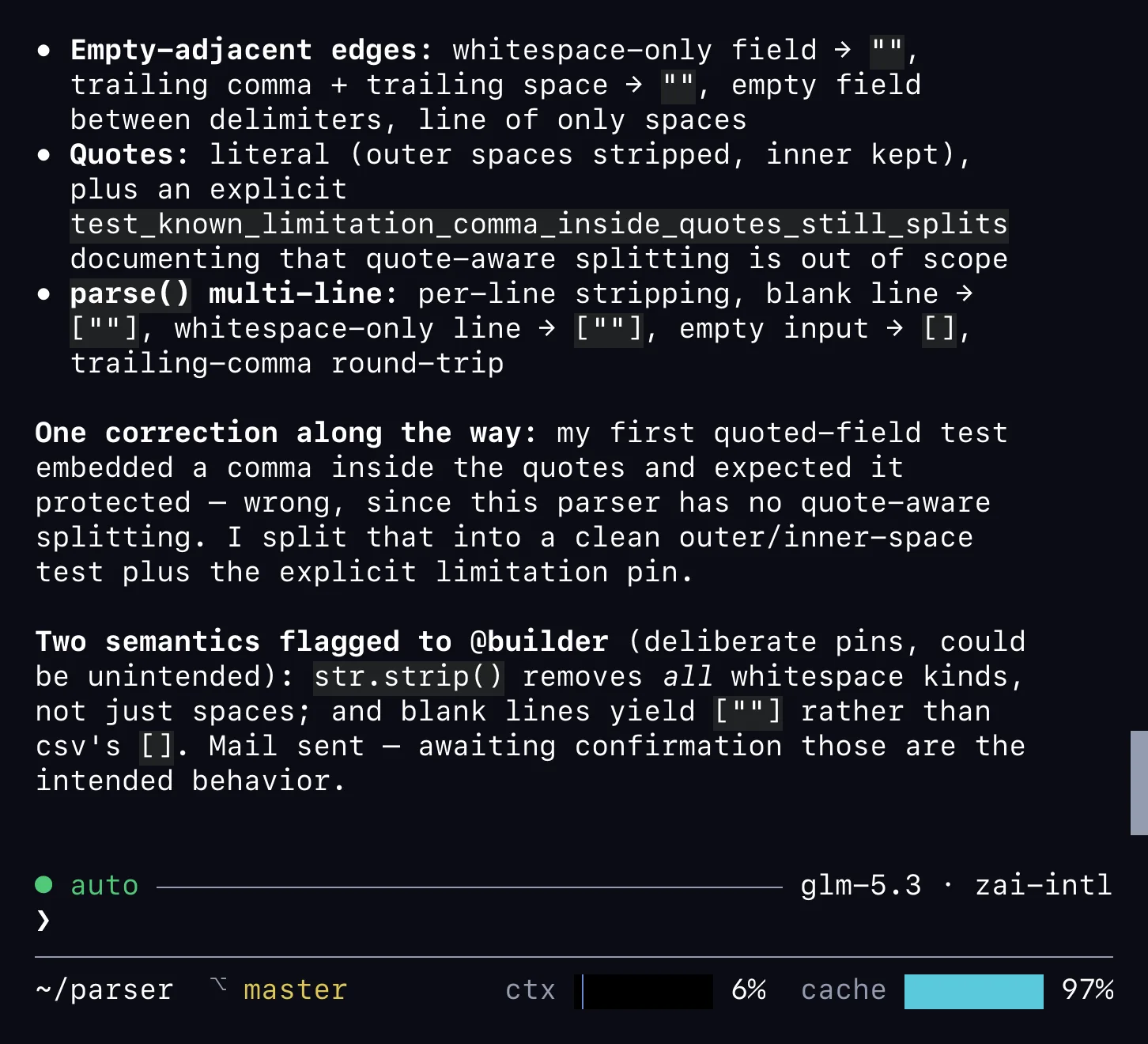
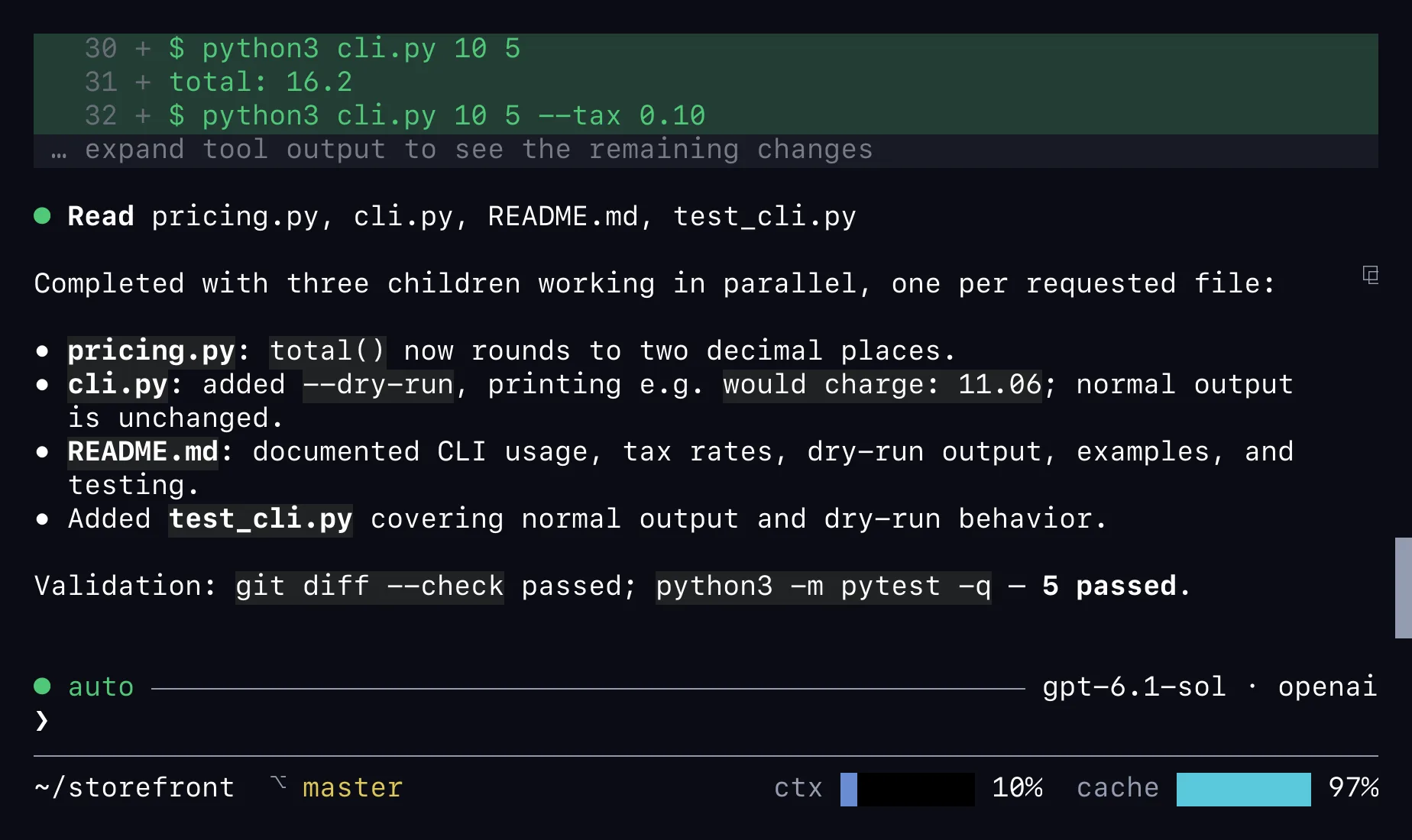
Three subagents, one build cache.
Each subagent works in its own copy that shares your build cache, and its edits land back in your checkout.
Uses the Chrome you already have.
Sign in once in its own profile and it stays signed in. Web search needs no API key.
- Browser
- The Chrome, Edge, or Brave already on your computer
- Profile
- Its own, separate from your everyday browsing
- Logins
- Sign in once in a visible window, kept across sessions
- Search
- Free, no API key; pages come back as clean markdown
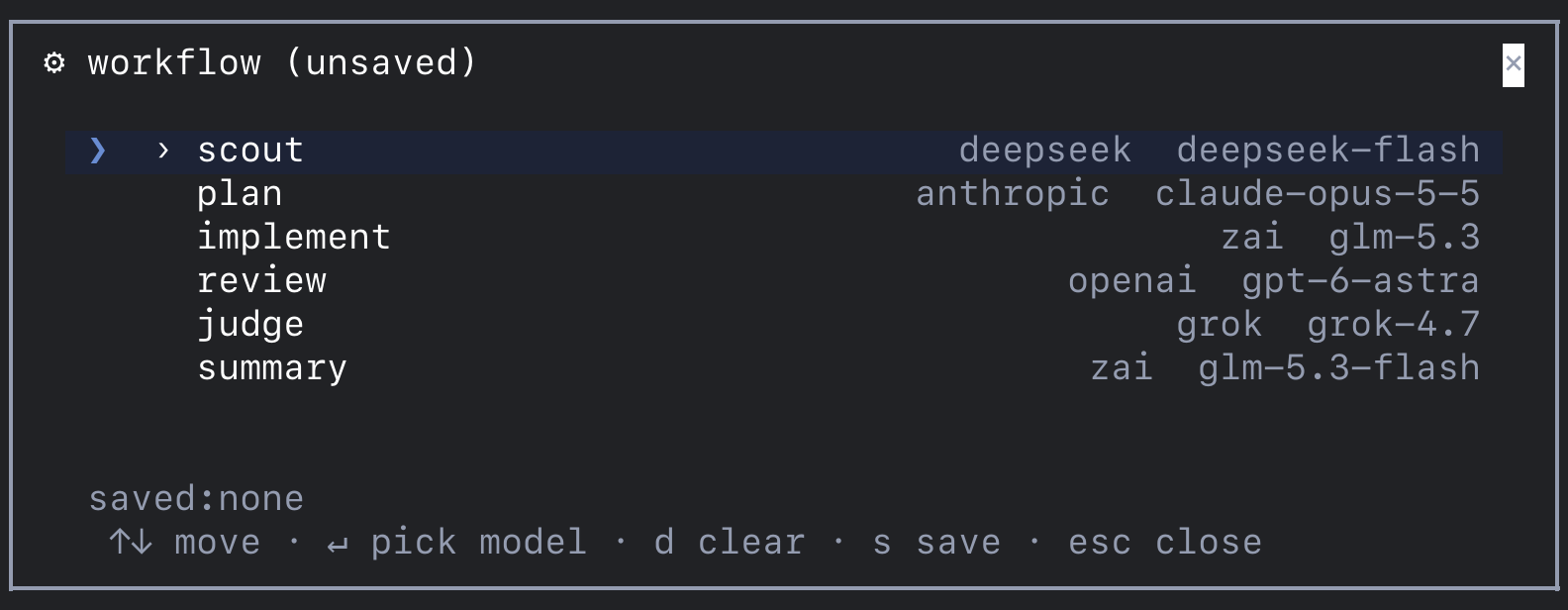
A different model for every job.
Plan on one model, write on another, review on a third.
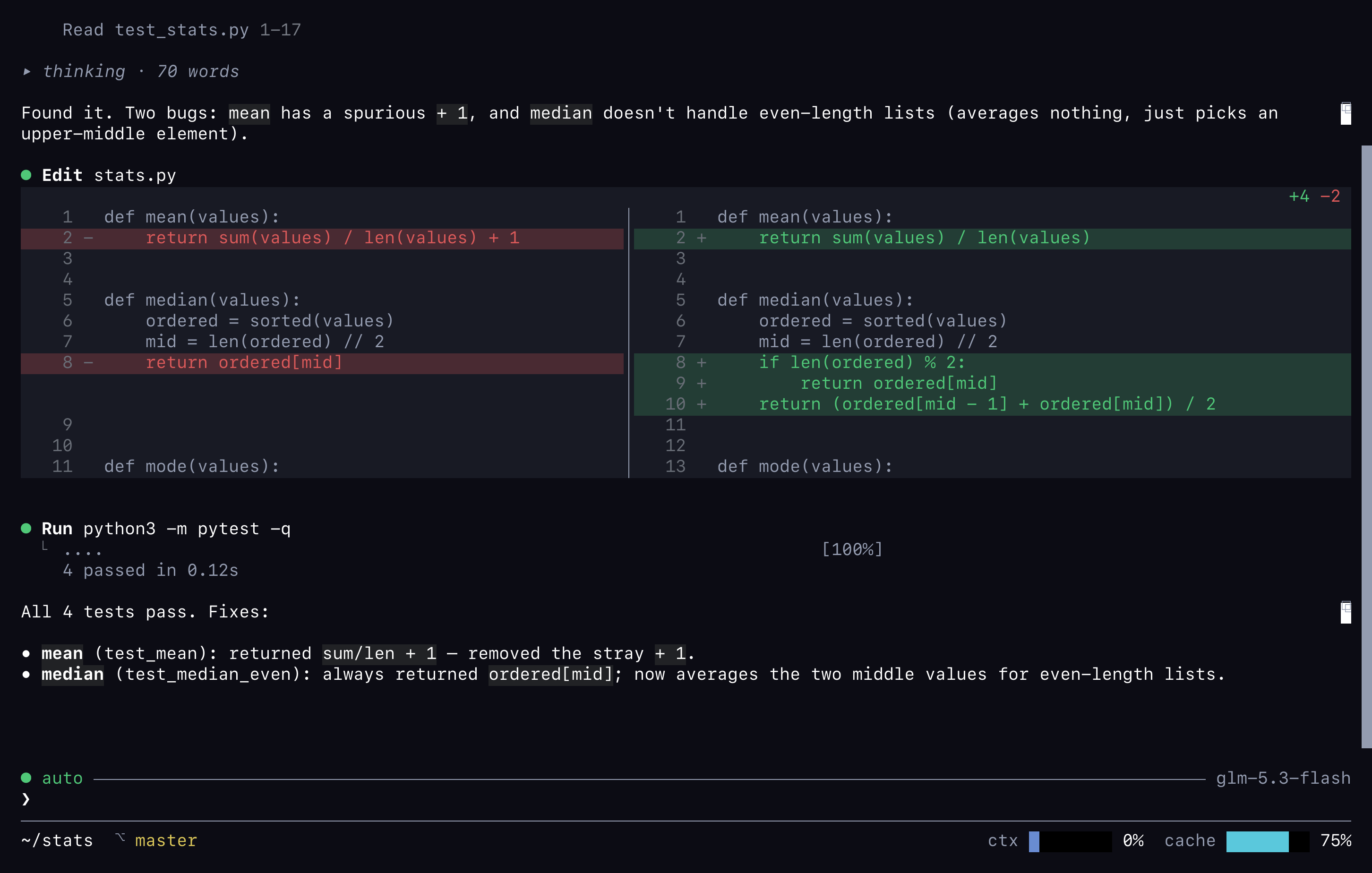
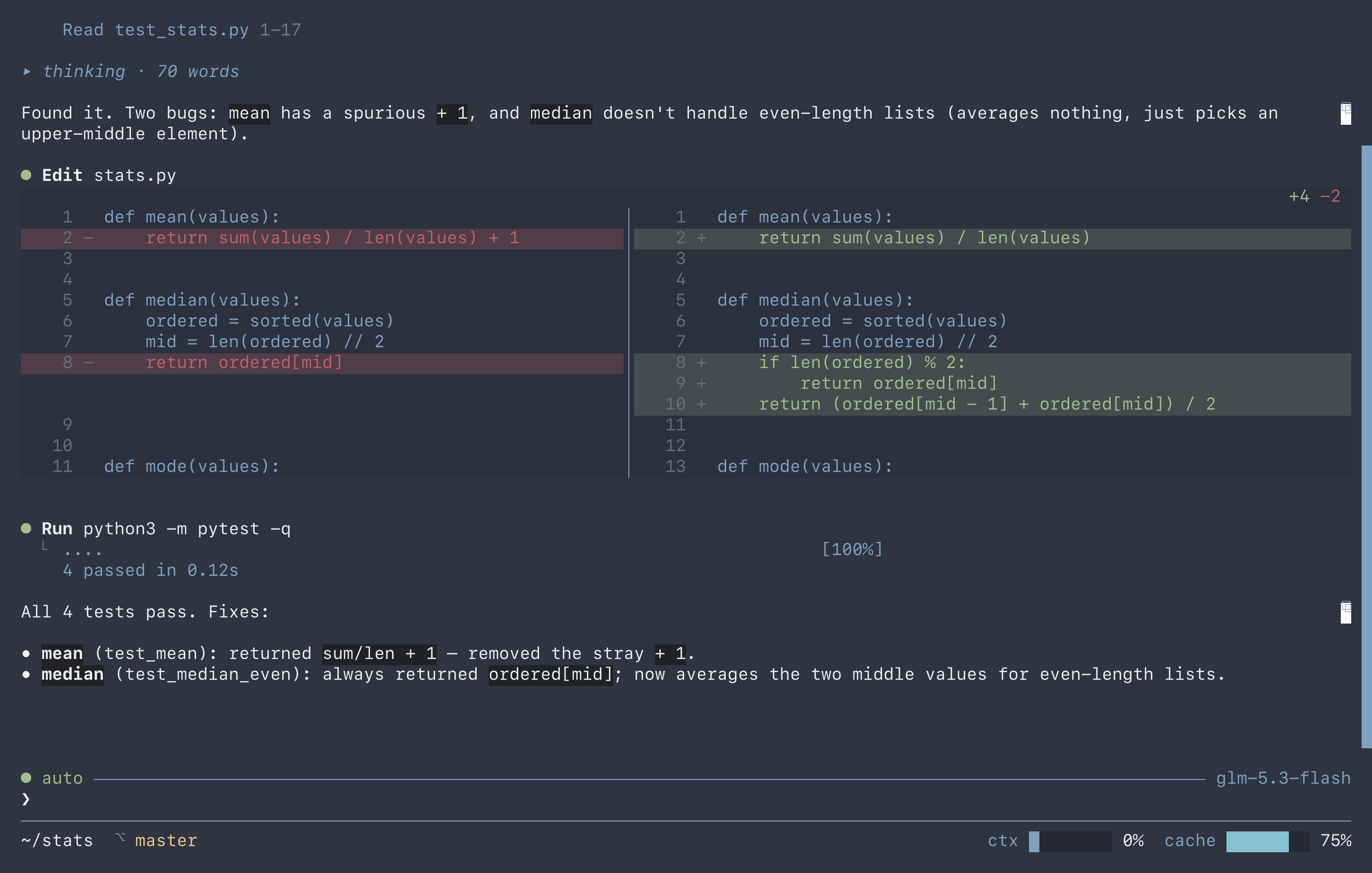
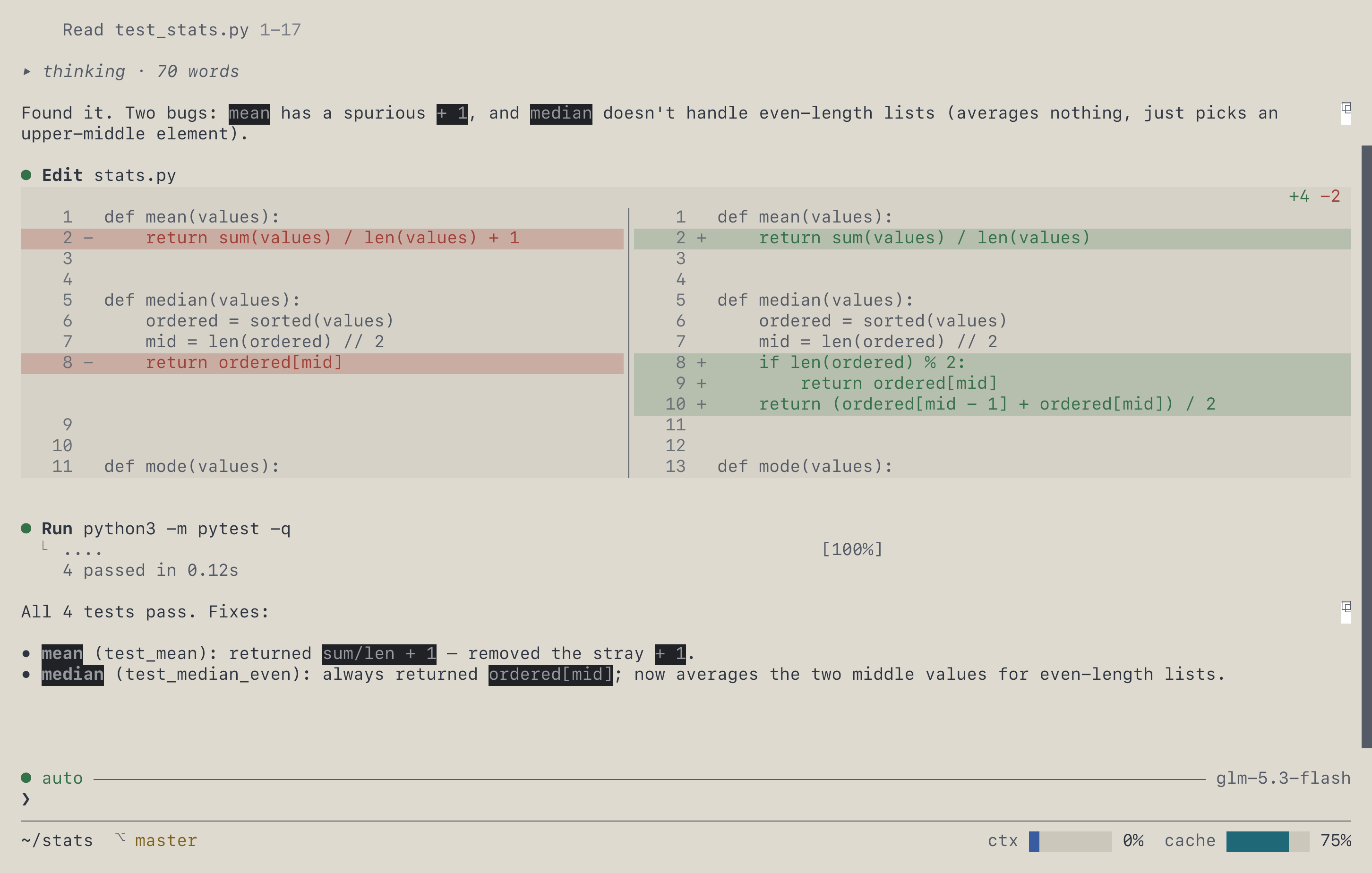
Your terminal, your theme.
Space, Nord, and Dawn, or your own colors in a theme file. Every pane is drawn by Sigil, our TUI/GUI library.
Also in the box
- Your plan or your key
- Sign in with ChatGPT or SuperGrok, or bring a key for any of 28 providers.
- Goals
- Set a goal and walk away. It stops when your check passes.
- Tagged edits
- A stale edit fails instead of landing on the wrong line.
- No permission prompts
- It only asks before damage you can’t undo. There’s no sandbox, so give it a container when it shouldn’t touch your machine.
- Add anything
- MCP servers, hooks, skills, and plugins, while summonr itself stays at 27 MB.
- Private
- No account, no telemetry.
curl -fsSL https://summonr.dev/install.sh | sh